Guides
The real cost of insuring a videography business, explained
Insurance for a videography business priced by exposure, with illustrative premiums, the exclusions that end claims, and what a broker needs from you.
What to take away
- A videography business run by one person, with a $20,000 kit, typically pays $700 to $1,400 a year for a business owner's policy. Add drone work or $60,000 of gear and the annual figure runs $2,500 to $5,000.
- Illustrative annual premiumsgeneral liability $400 to $900, property or inland marine $500 to $1,500, commercial auto $1,200 to $2,400. Workers compensation runs $1,500 to $4,000 per employee, professional liability $600 to $1,800, and drone cover $500 to $1,200.
- Online sellers such as Hiscox, Next Insurance and Thimble quote small-business liability in minutes. Full Frame Insurance writes photographer and videographer cover, and InsureMyEquipment schedules gear.
- A certificate of insurance naming the client as additional insured is a booking requirement at most corporate venues, and it takes days to issue, not minutes.
- The five exclusions that end claims are unattended vehicle theft, gear left overnight on location, out-of-state territory, hired-in equipment, and rights claims.
- Your premium is built from your kit schedule, revenue, crew count, territory and claims history. The figures above are illustrative, not quotes.
What a videography policy actually costs
No two videography businesses pay the same premium. The price is built from your own facts. The ranges below are what brokers writing production risks quote for a small shop, and they are useful for budgeting before you call one.
| Cover | Typical annual premium | What drives the number |
|---|---|---|
| General liability | $400 to $900 | Revenue, whether you work at client premises, event work |
| Commercial property or inland marine | $500 to $1,500 | Scheduled kit value, transit and off-premises cover |
| Commercial auto | $1,200 to $2,400 | Whether vehicles are owned, hired or personal |
| Workers compensation | $1,500 to $4,000 per employee | Payroll, classification code, state rate |
| Professional liability | $600 to $1,800 | Contract values, rights and licensing exposure |
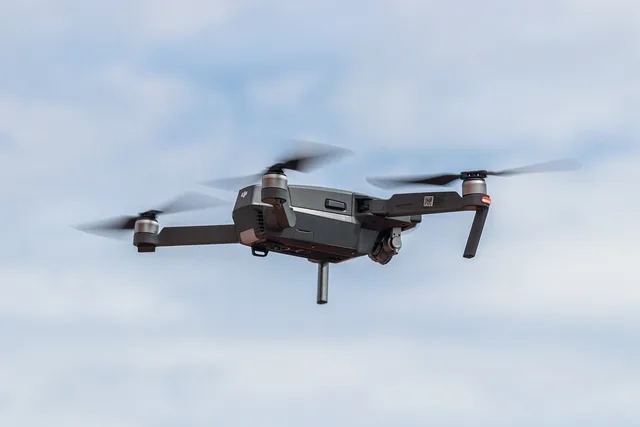
| Drone cover | $500 to $1,200 | Aircraft value, Part 107 certification, flight hours |
| Business owner's policy (general liability plus property) | $700 to $1,400 | Kit value, revenue, premises, how much work happens off site |
| Short-term event liability, sold by the day | $15 to $40 per day, about $60 to $120 per month | Number of event days, limits, state |
| Equipment floater on a $60,000 kit | $1,000 to $2,500 | Scheduled value, transit, off-premises cover, deductible |
A business owner's policy bundling general liability and property is the usual starting point for a solo operator. Add the lines your work actually touches. Drop the ones it does not.
Treat every figure as illustrative. Your broker prices from your schedule, your revenue and your loss history. A number copied from another business tells you nothing about yours.
Several sellers quote online without a broker. Hiscox sells small-business policies direct, and Next Insurance and Thimble return liability quotes in minutes. Full Frame Insurance writes photographer and videographer cover, InsureMyEquipment schedules camera gear, and SkyWatch.AI and Global Aerospace write drone policies.
A single event day of liability cover from Thimble or Next typically runs $15 to $40, or roughly $60 to $120 for a month. That suits a shooter who needs a certificate for one weekend and nothing more.
Why the label does not tell you what you bought
Two policies both called "general liability" can respond very differently to the same loss. One covers work at third-party premises; the other excludes it. One counts a 1099 camera operator as a worker; the other does not.
The wording decides. Read the exclusions page before the declarations page. Ask the broker to point at the clause that covers the loss you are worried about.
Exposure by exposure
| What can go wrong | The cover usually discussed | The question to ask the broker |
|---|---|---|
| Your camera is stolen from a vehicle | Equipment or inland marine cover | Is unattended vehicle theft excluded, and under what conditions? |
| Rented gear is damaged on set | Rented or borrowed equipment cover | Does it extend to gear hired in another state? |
| A lens rented from Lensrentals or BorrowLenses is damaged | Rented equipment, or the rental house damage waiver | Does the house accept your certificate, or must you buy its waiver? |
| A light stand injures a bystander | General liability | Does it cover work at third-party premises and events? |
| You mark a client's floor or wall | Third-party property damage | Is damage to property in your care treated differently? |
| A crew member is injured on your shoot | Workers coverage, where required | Who counts as a worker under this policy? |
| A drone causes damage | Aviation or drone-specific cover | Is drone use excluded from the general policy entirely? |
| A client claims the delivered work caused loss | Professional or errors cover | Does it respond to rights and licensing claims? |
| Footage is lost before delivery | Media or reshoot cover | What proof of loss is required, and what is payable? |
| Client data or footage is exposed | Cyber cover | Does it cover client material held on your systems? |
The right-hand column is the useful part. A broker who cannot answer those questions specifically is selling you a label.
Loss versus cover to ask about
What goes wrong
- Camera stolen from vehicle
- Equipment or inland marine
- Rented gear damaged on set
- Rented equipment cover
- Light stand injures bystander
- General liability
- Crew member injured
- Workers coverage
- Drone causes damage
- Drone-specific cover
- Client claims delivered work caused loss
- Professional or errors cover
- Footage lost before delivery
- Media or reshoot cover
Cover discussed
- Camera stolen from vehicle
- Is unattended theft excluded?
- Rented gear damaged on set
- Does it extend out of state?
- Light stand injures bystander
- Third-party premises covered?
- Crew member injured
- Who counts as a worker?
- Drone causes damage
- Is drone use excluded?
- Client claims delivered work caused loss
- Rights and licensing claims?
- Footage lost before delivery
- What proof of loss is required?
Ask the broker
- Camera stolen from vehicle
- Rented gear damaged on set
- Light stand injures bystander
- Crew member injured
- Drone causes damage
- Client claims delivered work caused loss
- Footage lost before delivery
The exclusions that surprise production companies
Unattended vehicles. Gear stolen from a locked car is a common loss and a common exclusion. The condition sometimes turns on time of day, an alarm, or where the vehicle was parked.
Gear left on location overnight. Multi-day shoots often leave equipment in a venue. That gear may be treated differently from gear in your possession.
Territory. A policy written for one state may not follow you across a border. International work almost always needs a conversation with the broker.
Rented equipment. Many rental houses require specific evidence of cover. A general policy may not extend to hired-in gear without an endorsement.
Rights claims. A complaint about music or footage rights is not a physical loss. It sits, if anywhere, in professional or media cover rather than in the policy protecting your cameras.
That last one is the exposure most under-insured in this trade. The U.S. Copyright Office's work on the music marketplace explains why: a track can carry a composition right and a master right with separate licensing paths, so a clearance failure is foreseeable rather than unlucky.
Read the license terms you hold, and take anything commercially significant to a qualified attorney.
What clients and venues actually ask for
Corporate clients, universities, hospitals and event venues often require a certificate before you are admitted. Some require that they be named on it. Two consequences follow.
Ask early. A certificate naming an additional insured is an administrative task with a lead time. Discovering it the day before a shoot is a lost booking.
Read what they ask for, not what you assume. Requirements are written in terms of coverage types and limits. Matching them is your job rather than the venue's.
Getting the schedule right
Equipment cover is written against a schedule or a total value. An accurate asset register decides whether a claim pays. Keep serial numbers, purchase dates, prices and receipts, and update the register when you buy or sell.
That register is also what the camera, audio and lighting setup guide produces as a by-product. The practical version belongs with the kit checklist for a first shoot.
Undervaluing the schedule to cut premium is a false saving. It reveals itself at exactly the wrong moment.
People, hours and the coverage that follows them
Paying someone to work on a shoot raises new questions. Employee or contractor, coverage where you operate, records you keep. Requirements are set by each state.
Do not take them from a page like this one. Ask a broker and an accountant. Ask the Department of Labor about wage and hour obligations.
Recording hours matters more here than in most trades. Schedules and working environments vary widely by production, as the Bureau of Labor Statistics description of broadcast, sound and video technicians records. A long event day followed by an early call is exactly the pattern that cannot be reconstructed later.
Premises, the public and accessibility
If you keep a studio the public visits, the building brings its own exposures and its own obligations. Accessibility is one of them. The Department of Justice's ADA guide for small businesses is a readable orientation to the general framework. Confirm current requirements with the Justice Department directly.
Where insurance meets registration, permits and releases, the fuller map is in licensing, releases and compliance. The research procedure for your own jurisdiction is in which registrations and permits a video business needs.
Common questions
How much cover do I need?
Work it out from your kit schedule and from the certificates clients ask for. Then discuss limits with a broker. A solo operator with $20,000 of gear usually starts around $1 million in general liability, which is what most venues require. Do not anchor it on a figure from another business.
Is a general small business policy enough?
Sometimes for the liability half, rarely for the equipment half. Almost never for rights exposures. Production has specific gaps around transit, hired gear, drones and media claims. The wording matters more than the policy name.
Does insurance replace a release?
No. A release is permission; insurance is a response to a loss. A claim arising from missing permission may not be covered at all, and the paperwork is the cheaper of the two.
What should I do after a loss?
Report it promptly, document it thoroughly, and do not admit liability on the spot. Photographs, a written account taken the same day, and the police report where relevant are what the claim will be assessed on.
Does working in another city change my cover?
It can, through territory wording and through local requirements at venues. Ask before you travel rather than after. Weigh it as a real cost when reading expanding into another market.