Guides
US-Canada Shoots: Videography Company Operations
Videography company operations for US-Canada shoots: work permits, carnet security, tax withholding and treaty relief, drone rules, insurance, and GST/HST.
What to take away
- Paid shooting across the border is work. Visitor entry does not cover it, in either direction.
- Four answers settle the paperworkwho is paid where, which gear crosses and returns, who the client is, and which labor rules govern the set.
- An ATA carnet keeps gear duty free when every item is listed and comes home.
- Default withholding is 30 percent in the US and 25 percent in Canada. A treaty claim form, normally a W-8BEN, stops it at the source.
Work authorization for crew paid on the other side
A Canadian camera operator who flies to Chicago for a paid client shoot needs work authorization. B-1 visitor status covers meetings and negotiations, not hands on production.
TN status covers Canadian citizens in listed CUSMA professions. Producers and directors have been approved under management or related entries, but camera operator is not on the list, so that role often fails.
TN status is not the only possible U.S. route, but there is no general crew visa. Depending on the production and the person’s qualifications, an O-1B may fit someone with extraordinary ability or achievement in the arts or motion picture and television industry. Essential support personnel may qualify for O-2 status to support an O-1, or P-1S or P-2S status to support a qualifying P-1 or P-2 artist or group. These categories have specific eligibility requirements and are not a workaround for ordinary crew jobs.
A U.S. employer or agent generally files Form I-129 with U.S. Citizenship and Immigration Services (USCIS) for an O or P petition. The crew member cannot simply rely on visitor status to perform the shoot; the petition and required admission documents must be arranged before work begins.
US citizens need no visitor visa for short Canadian trips, but paid production work needs a permit. The two LMIA exempt routes that matter are the Global Talent Stream, which has a two week processing standard for eligible occupations, and the International Mobility Program. The IMP includes a significant benefit category used by film crews.
Applications filed online from outside Canada commonly take several weeks to a few months. Verify current times with IRCC before booking. A foreign shoot adds steps at both ends of a job, so read the videography workflow from booking to delivery before accepting one.
Carnets, customs and gear at the port of entry
US carnets come from the US Council for International Business and from boomerang carnets, a USCIB authorized provider. Canada's issuer is the Canadian Chamber of Commerce.
Typical range: a basic issuing fee of roughly $300 to $600, plus a refundable deposit or a paid surety set against declared value. Confirm current terms with the issuer.
Carnets, customs and gear
- Apply through an issuing association at least three weeks before travel.
- Pay the fee and post the deposit or surety.
- List every serialized item with a replacement value.
- Get every carnet page stamped at each crossing.
- Bring the gear home before validity ends, normally twelve months.
How the Carnet Works
- Apply through issuing association before travel
- Pay issuing fee and security deposit
- Carry carnet with gear at all times
- Present at each crossing, in and out
- Get every page stamped, including return
An unstamped page is expensive. If the exit stamp is missing, customs can treat the gear as not re-exported and assess duty, taxes and any applicable penalties. The amount depends on the goods, their value and the customs authority’s assessment.
US entry follows CBP clearance guidance.
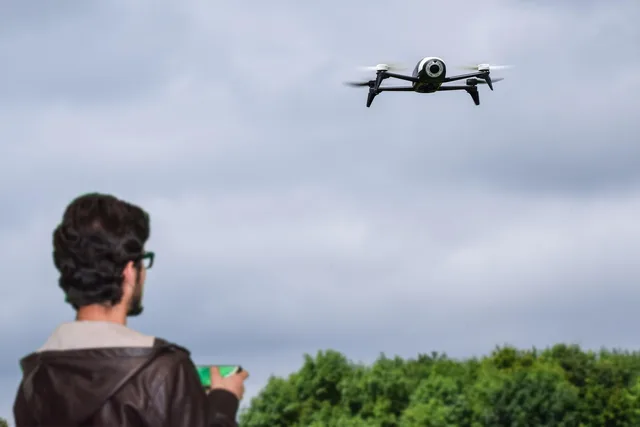
Drones add a layer. Commercial flight in the US needs a remote pilot certificate under FAA Part 107. The FAA Part 107 drone rules cover a US shoot, and Transport Canada registers drones separately. A U.S. Part 107 certificate does not authorize a flight in Canada: a foreign operator generally needs a Special Flight Operations Certificate for remotely piloted aircraft systems (SFOC-RPAS) from Transport Canada before operating there. Treat the two countries’ airspace as separate jobs; carnet and border paperwork are not flight permission.
Withholding: U.S. tax, Canada Regulation 105 and treaty relief
A US company paying Canadian crew for services performed in the United States may have to withhold and remit tax to the IRS. The general 30 percent withholding rate can apply to U.S.-source income paid to a foreign person unless valid documentation supports treaty relief or a different treatment.
Withholding: 30 percent, 25 percent
Default rate
- US payer, Canadian payee
- 30 percent
- Canadian payer, US payee
- 25 percent
How relief is claimed
- US payer, Canadian payee
- Form W-8BEN or W-8BEN-E, treaty article on business profits
- Canadian payer, US payee
- CRA forms NR301 or NR302, then an NR4 slip at year end
For a U.S. payer, a payee may provide Form W-8BEN or W-8BEN-E to document foreign status and, when eligible, claim treaty treatment. The payer determines the withholding based on the income and documentation; filing a form does not guarantee relief. If tax was withheld, the payee may need to claim a refund.
- Confirm where the payer is based and where the services are physically performed.
- Ask what the payer plans to withhold and which rule applies.
- For a U.S. payer, provide the appropriate W-8 form if eligible. For a Canadian payer, request a CRA Regulation 105 waiver or reduction; do not treat a treaty declaration alone as that waiver.
- Keep the contract, submitted forms, any waiver and the withholding records in the project file.
- Reconcile at year end with your accountant.
For applicable U.S. payments, the withholding agent reports U.S.-source income and tax withheld on Form 1042-S. Keep it with the project and tax records; it reports withholding but does not waive it.
The IRS international taxpayers hub covers residency, income sourcing and treaty claims for people earning on both sides.
Entity type changes the answer. The pre-opening compliance checklist covers the groundwork that makes a first cross-border invoice easier to defend.
A US crew billing a Canadian client should check whether it must register for and collect GST/HST. The result depends on the supply, place-of-supply rules and the supplier’s circumstances, so do not assume an invoice is tax-free because the supplier is based in the United States.
Labor rules and insurance on a binational set
The USMCA labor chapter is enforceable, and the Department of Labor USMCA page explains how it is applied. It does not replace the workplace laws that apply where the crew is working; each country enforces its own requirements.
OSHA covers work performed in the United States. Provincial health and safety rules apply at Canadian sites. For example, Ontario’s Occupational Health and Safety Act applies in Ontario; confirm the applicable law and regulator for the province where each crew member works.
Wages for locally hired crew follow local law, and a misclassified crew member costs more than a payroll service would.
Ask the broker for a certificate naming the foreign shoot, and confirm that equipment, liability and hired auto cover extend north. Ask whether the policy needs a foreign voluntary workers’ compensation and employers’ liability endorsement. Workers’ compensation requirements and authorities differ by province; examples include WSIB in Ontario, WorkSafeBC in British Columbia and CNESST in Quebec. The insurance cost and coverage breakdown shows what those endorsements usually add.
Contracts should name governing law, currency, who bears withholding, and what happens if a permit is refused. A force majeure clause limited to weather will not cover a denied permit.
Lead times and where to verify them
Typical ranges, not quotes.
Lead times and where to verify
| Item | Typical range | Verify with |
|---|---|---|
| ATA carnet | 2 to 4 weeks | USCIB, boomerang carnets, Canadian Chamber of Commerce |
| Canada work permit, LMIA exempt | several weeks to a few months | IRCC |
| Insurance endorsement for a foreign shoot | 1 to 3 weeks | your broker |