Guides
Videography scheduling by edit capacity
Videography scheduling starts with edit capacity: pair shoot and delivery dates, record dependencies, add three kinds of slack, and set reschedule terms.
What to take away
- Shoot days are easy to schedule and easy to fill. Videography scheduling fails for the opposite reason: the edit is the constraint, and booking against camera availability is how a company ends up four weeks behind.
- Book post capacity at the same moment you book the shoot date, or the delivery date you promise is a wish.
- Every project needs a dependency date for the things that arrive late: approvals, music clearance, subject availability, venue permission.
- Delays are rarely caused by the day that slipped. They are caused by the queue behind it having no slack in the first place.
Schedule the edit, not the camera
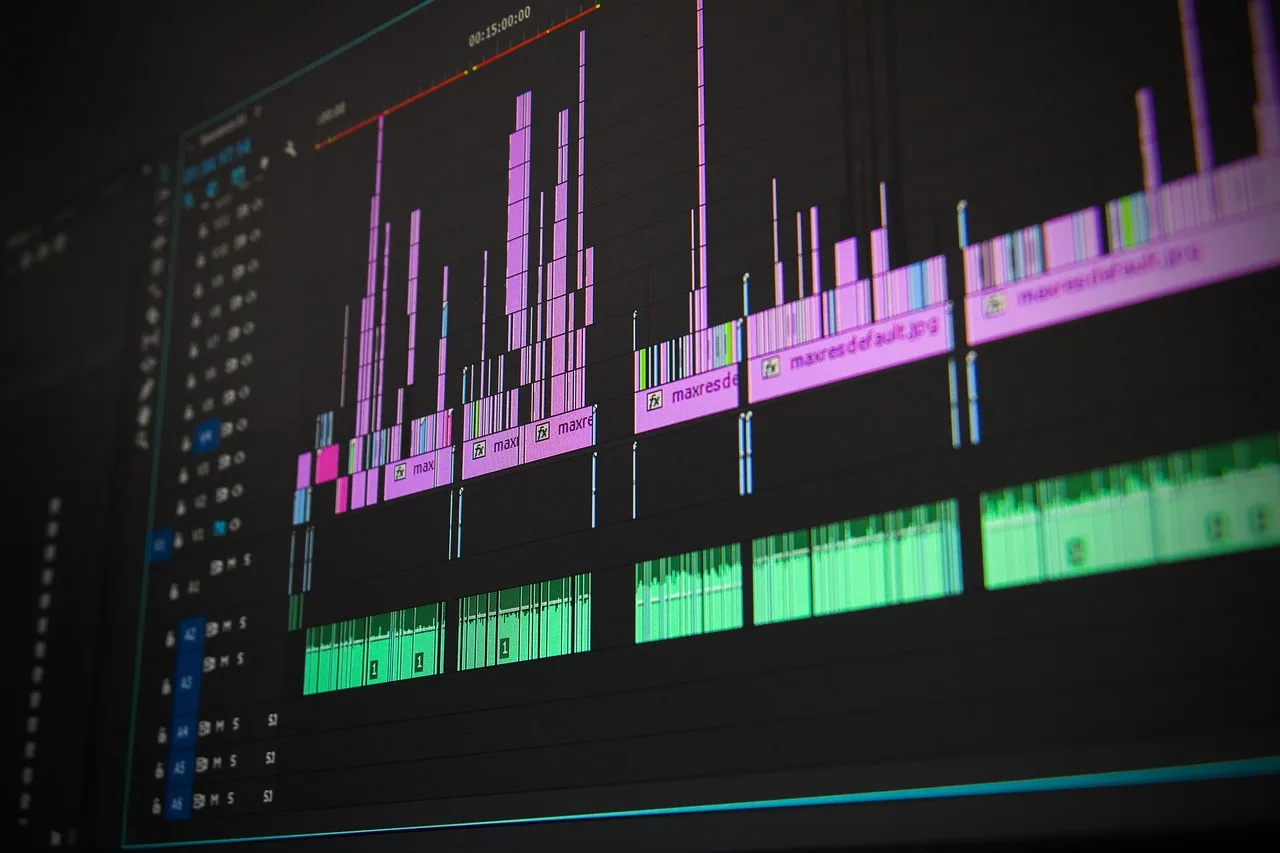
A camera can be booked for tomorrow. An editor cannot be in two projects at once, and a second project entering assembly does not go faster because it is urgent.
Edit capacity arithmetic
- Productive editing hours per weekper editor
- Divide by average finishing hoursper project type
- Resultprojects startable per week usually fewer than calendar suggests
So the booking unit is not a shoot day. It is a shoot day plus the finishing block behind it. If your measured post-to-shoot ratio is high, one shoot day may consume a week of edit capacity, and booking a second shoot into that week guarantees a slipped delivery on one of them.
Work out your own capacity like this. Take productive editing hours available per week, per editor. Divide by the average finishing hours for the project type you are booking. That is how many of that project type you can start per week, and it is almost always a smaller number than the calendar suggests.
The booking sequence
- Qualify the projectwhat is being made, when it is needed, and whether the deadline is real or aspirational.
- Lock the deliverable list before offering a date. Every extra version changes the finishing block, and therefore the date.
- Check post capacity for the week the edit would land in, not the week of the shoot.
- Offer a shoot date and a delivery date together, as a pair. Never one without the other.
- Take a deposit that confirms the booking and covers what you will spend before delivery.
- Write the dependency dates into the scheduleapprover named, music decided, releases collected, venue confirmed.
- Send the calendar invitation and the call sheet skeleton immediately, while the client is still engaged.
- Add the buffer, and do not tell yourself you will make it up later.
Steps four and five are the ones owners skip when they are hungry for the work. Both come back.
Eight-step booking sequence
- Qualify the project and deadline
- Lock deliverable list before dating
- Check post capacity, not shoot week
- Offer shoot and delivery as a pair
- Take confirming deposit
- Write dependency dates into schedule
- Send invite and call sheet skeleton
- Add the buffer
Buffer is a policy, not an accident
Every schedule needs slack in three places, and they are different kinds: shoot-day slack, edit slack and review slack. Each one absorbs a different kind of trouble.
Three kinds of schedule slack
Slack type
- Shoot-day slack
- Traffic, late subjects, no power
- Edit slack
- Harder assembly than expected
- Review slack
- Client taking longer than said
Absorbs
- Shoot-day slack
- Edit slack
- Review slack
Decide each of these once, as a policy, and apply it to every quote. A schedule with no declared buffer has buffer anyway: it is taken from your evenings.
Working conditions here make this worse than in most trades. Schedules and environments vary widely by production, as the Bureau of Labor Statistics description of broadcast, sound and video technicians records.
An event that overruns, a subject who cancels, a venue that changes its mind: none are unusual. A schedule that assumes none will happen is built for a different job.
The dependencies that arrive late
Four things routinely hold up delivery after the shoot is done, and all four can be scheduled.
Late dependencies to schedule
- Client approvalname one approver and date
- Subject availabilityretakes and pickups
- Venue and permissionwritten request lead time
- Musicseparate rights and licensing paths
Client approval. Name one approver at booking, agree the date they will respond by, and put it in the schedule as a task with an owner. A round that opens on a Friday and waits for a committee is two weeks gone.
Subject availability. Retakes, pickup lines and additional interviews need the same person again, and their calendar is not yours.
Venue and permission. Locations often have their own approval chain, and a building that said yes verbally may need a written request with lead time.
Music. People treat it like a shopping trip on export day. A track can carry more than one right, held by different parties: a synchronization license for the composition and a master use license for the recording, with a separate licensing path for each. The U.S. Copyright Office's work on the music marketplace sets that out.
If a project needs anything beyond a library you already hold, that is lead time, not a click. Read the license terms. Take anything commercially significant to a qualified attorney.
Reschedules, weather and cancellations
Write the policy before you need it, because you will be writing it while annoyed otherwise.
A reschedule policy has four parts: the notice period that releases a client from a booked day and the notice period that does not; who carries a weather call and by what time of day that call has to be made; what happens to crew already booked and held; and whether a deposit transfers to a new date or is consumed by it.
Settle all four in your booking terms, in writing, so you are not inventing a policy in the middle of a cancellation.
None of these has a universal right answer, and your policy has to be yours. What matters is that it exists in writing before the first cancellation. Crew commitments are the expensive half of this, and their cost structure is set out in hiring and training a crew.
Keep the booking record
A booking is a business record, not a calendar entry. Keep what was agreed, when, with whom, and what was paid. File the signed terms, date changes, approvals, and payment record with the project so the agreement and money trail can be checked later.
The record also settles disputes about who moved a date, which matters when the client remembers it differently. Where the booking meets the rest of the pipeline, the stages are set out in the shoot-to-delivery workflow.
Common questions
How far ahead should I be booked?
Far enough that a cancellation does not empty a week, and not so far that you cannot take good work when it appears. Watch the ratio of booked capacity to available capacity over a quarter rather than judging by how busy this week feels.
A client wants a date I cannot make. What do I offer?
Offer the date you can actually deliver on, and offer to reduce the deliverable list for a faster turnaround. Both are honest. Agreeing to a date you cannot make costs you the client anyway, later, with more damage.
Should I hold provisional dates?
Only with an expiry. A provisional hold with no end date is a booked day that earns nothing. Set a date by which it converts or releases, and tell the client that date at the time.
Do permits and permissions really need scheduling?
Yes. Filming permissions, drone rules and venue requirements differ by place and by site, so allow lead time and check locally: in the United States, commercial drone flights operate under the FAA's Part 107 rule, and filming on public land usually needs a permit from the city, state or federal agency that manages the site. The obligations side of that is in licensing, releases and compliance.
What changes when I take work in another city?
Travel days become part of the booking unit, and local dependencies get longer because you cannot resolve them by walking in. Treat a shoot away from base as consuming more capacity than the same shoot at home, and read it against expanding into another market before committing to regular travel.
Is the gear ever the constraint?
Occasionally, on multi-camera or event work where two projects need the same kit on the same day. It is a simpler problem than the edit queue, and it is solved by knowing what you own, which is the point of the camera, audio and lighting setup guide.